

Four Things #40
An essay disguised as a festival review

Welcome to Four Things #40.
Hope you’re doing as well as you can, today I’m keeping my intro paragraph short and sweet and leave my rant for the First Thing. (You will see what I mean)
Welcome to my new readers, hope you enjoy the ride. If you are into the Four Things vibe then please subscribe, pass the link on to your friends, and use it as your own conversation starter if you will. Feedback, topics or collaborative ideas are very much welcome, hit me up by email or in a DM on IG ! Wishing you love and health..
Let’s get to the Things!
Martyn
Oct 16th, 2025
FIRST THING: AN ESSAY DISGUISED AS A FESTIVAL REVIEW
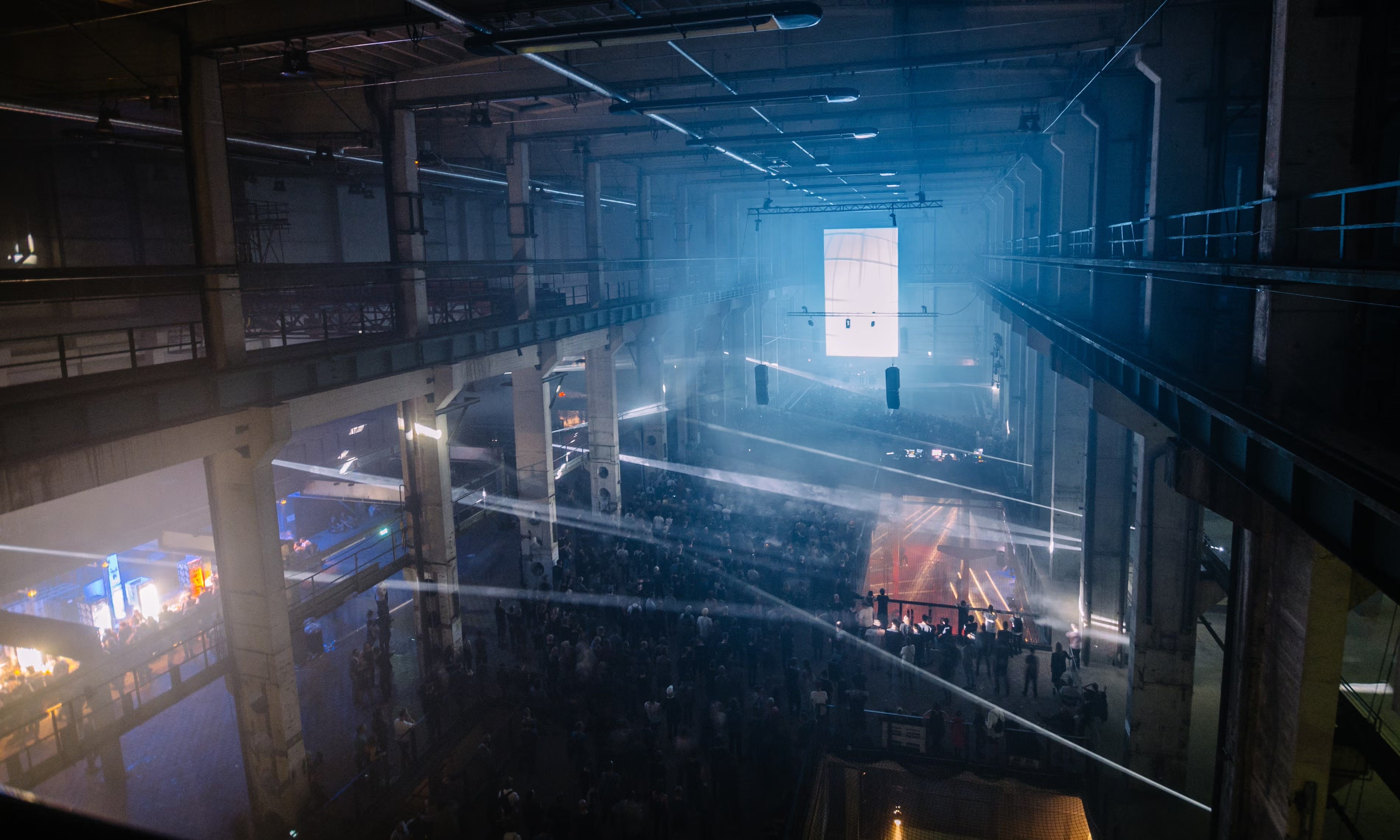
A couple weeks ago I was traveling by train from Berlin to The Netherlands, after visiting the Berlin Atonal 2025 festival at Kraftwerk which had just wrapped up. It was a remarkable experience to say the least, I’ve played in Berlin many times and several times in Kraftwerk’s smaller upstairs club Globus, but for some reason I never had (taken) the time to properly explore the rest of this massive industrial complex. Visiting the festival and witnessing loads of extraordinary performances, ignited a wave of fresh ideas and inspiration within me. Not just on a sonic level but without a doubt events like these are also a fantastic chance to reconnect with many old friends—some of whom I usually only engage with online or via phone.
I’ve noticed that over the years, even these brief conversations I have with friends tend to have more meaning and substance. Perhaps it’s a result of maturity, my circle of friends or simply the times we live in, but I really love how people quickly skip past the pleasantries and getting straight to the heart of the topic, almost as if they are otherwise running out of time somehow. Discussions have shifted from mundane inquiries like “How long are you in town?” to deeper topics on the axis of creativity, mental wellbeing, community, art and politics — all my favorite subjects. On that train ride I was reflecting on some of those conversations.
Both physically as well as artistically I’ve often found myself on the periphery of the music scene, particularly at the beginning of my career, where being an outsider meant it was a constant struggle to be heard. It can be a challenge to get your music in the right people’s ears if you’re not constantly ‘around’, in major cultural hubs of cities like London, Berlin, Amsterdam and New York City. My hometown (Eindhoven in The Netherlands) is often humorously described as having a cultural “Calimero complex,” always feeling overshadowed by a larger city. Throughout the years, both in my mentoring and coaching as well as in talks with peers, I’ve had countless debates about the dynamic between smaller cities and larger metropolitan areas, and the eternal question whether to stay in your own little town and cultivate grassroots initiatives locally or move to the cultural hub everyone else is moving to as well.
“Location” is also a recurring theme in my music; I’ve always considered traveling and moving as a quest for belonging, first moving from Eindhoven to Rotterdam, and later immigrating to the United States. My songs frequently reference places with which I have personal ties or where significant things in my life took place, from Vancouver to the U-Bahn in Berlin (U1-U8), to the profoundly unremarkable suburbanism of America, on Elden St. and at Smith Switch.
In my mentoring work I often focus on community building and dedicate entire sessions to investigating what a scene or a community actually looks like for the attendees. It turns out that participants who live in very large cities often feel more overwhelmed by its vastness, leading to a sense of isolation in their respective music scene rather than excitement of being part of a large movement. Within these environments, cliques and internal politics can be stifling, causing individuals to retreat into smaller pockets of creatives (your little ‘crew’). Large cities however have more resources, and the potential for scalability as you’re able to find larger audiences even for niche acts and concepts. This energy is unique to the large cultural hub and undeniably appealing to many.
In smaller musical ecosystems, such as the ones I’ve lived in most of my life, resources are much more limited. This scarcity in venues, audience, peers / mentors (knowledge), diversity can often seem limiting but also compel people from diverse background, across generations, scenes, genres etc to work together to make something happen. Scene politics and cliques are still equally intense (because of the smaller turf perhaps) but I also see a lot of positivity in cross-pollination between genres and generations. There are many amazing examples of grass roots organizations and venues holding steadfast in these smaller communities, bravely withstanding the tides of corporatism and gentrification ; we should do everything we can to support them and preserve them.
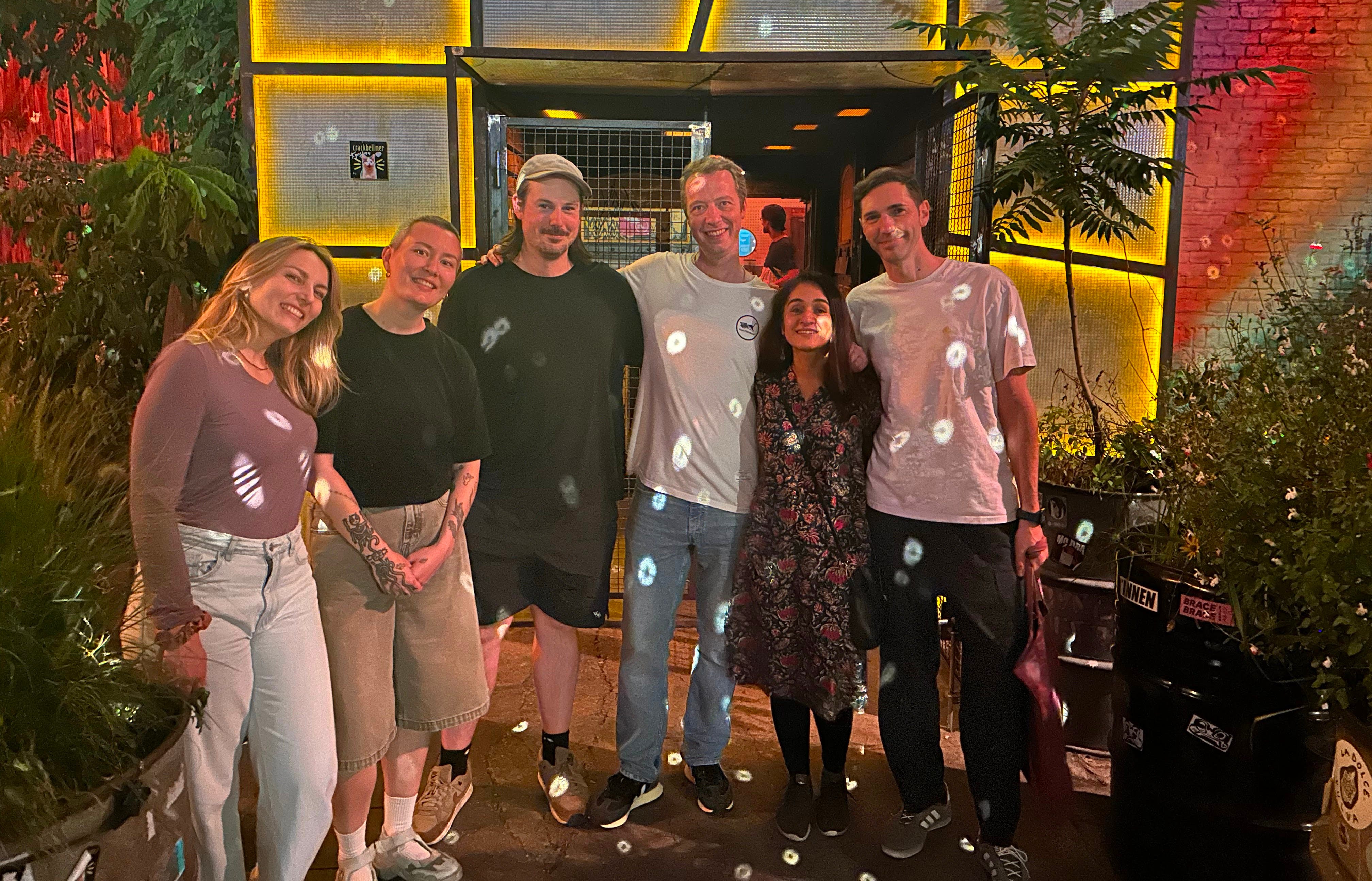
When I was in Berlin for Atonal, I also hosted a small workshop at a nearby venue called Crack Bellmer for the good people of Community Chai. The event was a great example of how important it is to facilitate connections through music and other forms of expression in large cultural hubs. Very often I hear comments in the vein of “I wish there was more of this” or “I had no idea there were people here making this kind of stuff”. It goes to show that people even in large cities are often silo’d and disconnected, often living just a few blocks apart, not being aware of each other’s existence until someone or something brings them together. For me personally, the true value of these events goes far beyond finishing a track or getting it signed to a label. It’s about forging these long lasting music relationships and ultimately strengthening the entire community.
Finally, visiting Berlin meant I could have a great Indonesian lunch with my friend Musa Okwonga at his favorite spot on Brücknerstraße. In Musa’s vast work as a writer, thinker and podcaster often emphasizes the link between community, culture, and the current political landscape. It was part of a much longer conversation but one thing that stood out to me was him underlining the importance of building and fostering community as a form of political resistance. As we have seen over the past decade or so, the primary strategy of the right’s power grab in Europe and especially in the US, is to make people feel powerless and silo them in. By use of social media echo chambers and ‘othering’ groups of people the right tries to unhinge the social cohesion of communities everywhere. This propelled my music scene specific view of community building to a much larger level. What the powers that be fear most of all is people showing up and speaking out in significant numbers. Therefore, cultivating community is perhaps the most effective way to demonstrate to those in power that their efforts will be futile. We should embrace that idea and work towards creating greater cohesion on any level, no matter whether you spend your energy into mobilizing five people or five million.
SECOND THING: WERNER HERZOG ON SKATEBOARDING
An older video, but this will guaranteed make your entire day. Three minutes and 54 seconds of perfection. Big up Jenkem Mag.
THIRD THING: FAKE THE FUNK
Wanted to point you to two publications I very much enjoyed and have revisited several times in the past few months. First up is this extremely thoughtful and well-researched piece for the gallery publication Gagosian Quarterly, written by Jace Clayton (DJ/Rupture) somewhere last year but, I suppose in observance of the most recent 808-day, randomly popped up on my timeline . In the piece he draws comparisons between mathematical randomization in the creation of the Roland TR808 and TB303 and how the unique circumstances in which those machines were created influenced, even spiraled an entire culture into being. A comparable set of circumstances seems to arise with the use of certain AI tools when they aren’t used in the way they were meant to be used. An interesting, positive thought!
The piece also reminded me of this one by Jacob Arnold from 2015 for Red Bull Music Academy which is thankfully still available online in the RBMA archive. This is one of my favorite pieces about Ron Hardy and Chicago’s Music Box club in it’s earliest inception. Also makes me yearn for more high quality music journalism in today’s electronic music space, I’m talking well-researched, macro view long form articles, not reactionary EDM & tech doom & gloom.

FOURTH THING: TENDER VOID
As always I’ll end my newsletter with some brand new music. We just announced “Tender Void” by Rotterdam’s bass powerhouse Kessler, and it marks another full circle moment for 3024. These four tracks were crafted in a studio space less than a kilometer from the one where 3024 was born back in 2007 (!), and where I made Velvet, Vancouver and a couple of the other very early 3024 tracks. Even though these Kessler pieces firmly breathe his signature futuristic approach to the sound, there’s also a palpable deference for the history of the bass music continuum.
After I played him the track “Kohrt” an old friend of mine and acclaimed single-sentence reviewer Executive Steve described it as follows: “It’s closer to what I hoped would become of that whole 140 sound than almost anyone has managed to say since the early 3024 / Applepips / Tectonic days. Basic Channel, Robert Hood and El-B popping a champagne cork on a Sunday night in Hackney in 1998”.
Check out the pre-order track, a beautifully introspective slice of garage inspired moodiness. The full EP drops on November 7th.
Loved that Werner Herzog snippet, had it in my newsletter a year or two ago. Always worth resurfacing.